Moving company website cost in 2026
Updated September 30, 2026
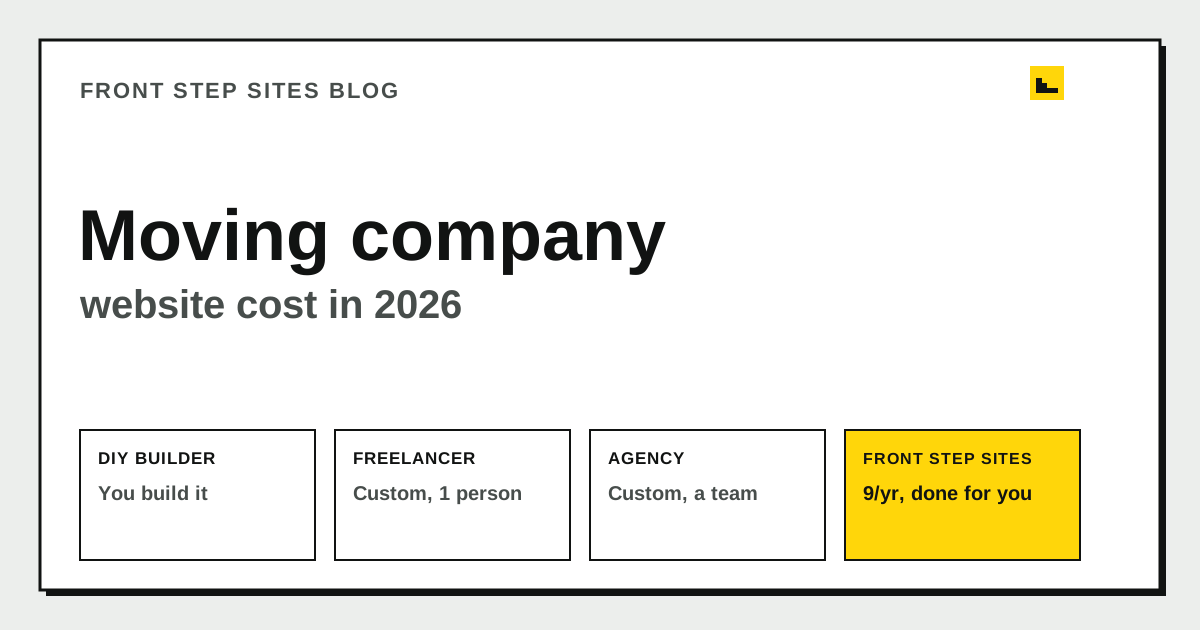
A moving company website costs anywhere from a DIY builder's monthly fee to several thousand dollars for custom freelancer or agency work. A done-for-you plan lands in between: Front Step Sites is $99 a year with the domain included and no setup fee. What actually pushes the price up is how many real pages your business needs: local moves, long-distance moves, and an honest explanation of how your estimates work.
Why the moving industry needs a website that does real work
Moving is a bigger market than most owners realize. According to the U.S. Census Bureau's 2024 American Community Survey, 39.6 million people, about 11.8% of the U.S. population, moved that year. Of those, roughly 29.9 million moved within the same state and about 7.1 million moved to a different state. That in-state versus interstate split matters for your website, because it's two different services with two different sets of rules.
Price matters just as much as reach. According to This Old House's 2025-2026 moving survey, a local move averages $1,489, while a long-distance move averages $3,124. Full-service movers in that survey charged around $1,037 for moves under 50 miles and $6,164 for moves between 1,101 and 1,400 miles. When the range is that wide, a customer needs your site to tell them which end of it they're likely to land on, or at least how to get a real number.
The four pricing tiers, compared
Here's how the usual paths to a moving company website compare:
| Tier | Typical cost | Best for | Watch for |
|---|---|---|---|
| DIY builder | A monthly plan fee, paid by you | An owner with time to keep service areas and pricing pages current | You maintain every update yourself, including seasonal availability |
| Freelancer | Often a few thousand dollars for a custom build | A mover who wants a one-off custom design with a clear, written scope | Get the exact page list in writing before quoting; scope creep is common |
| Agency | Often a few thousand dollars and up, sometimes bundled with marketing | A company folding the website into a bigger ad and branding push | Ask for a line-item breakdown of website work versus ad spend |
| Front Step Sites | $99/yr, domain included, no setup fee | An owner who wants to request changes without learning a website editor | 2 change requests a month included; unlimited same-day changes on the $29/mo Grow plan |
Treat the freelancer and agency figures as planning ranges. A one-page moving company site costs less to build than one with separate local, long-distance, and commercial-moving pages, real photos of your crew and trucks, and a working quote-request form. Give every bidder the same scope so the quotes you get back are actually comparable.
The specific pages a mover's site needs
A moving company site isn't a single "book now" page. Customers researching a move are comparing options carefully: This Old House's survey found that 43% of homeowners got quotes from two moving companies and 29% got quotes from three before choosing one, with 40% naming cost as their top factor and 16% naming reviews. Your site is competing in that comparison round, so it needs to hold its own on a few specific pages:
- A service area page that states plainly which towns or metro areas you cover, since "we move anywhere" reads as vague to a shopper trying to narrow down options.
- Separate local and long-distance pages. A local move and an interstate move are different products with different pricing logic, and lumping them together makes both harder to explain.
- A plain-English page on how your estimates work, including whether you offer binding or non-binding estimates. Movers who are clear about this upfront save themselves disputes and bad reviews later.
- A commercial or office-moving page, if that's part of your business, since it's a different buyer with different questions than a household move.
The interstate registration your website should reflect
If you move households across state lines, federal law requires you to register with the Federal Motor Carrier Safety Administration and hold a USDOT number and MC operating authority. FMCSA notes that this requirement applies specifically to interstate moves; a purely local, in-state operation is exempt. If you're registered, your USDOT number belongs on your website, usually in the footer or on your long-distance page. It's a small detail that a shopper comparing quotes can actually verify, and skipping it looks worse than not mentioning it at all.
Getting quotes without overpaying
Write your real page list before you ask for prices: home page, local moving, long-distance moving, commercial moving if applicable, an estimates page, and a quote-request form. Hand that same list to every freelancer or agency you talk to. If one quote covers three pages and another covers eight, you're not comparing prices, you're comparing different projects.
Ask about the update process too, since a moving company's busy season and pricing can shift throughout the year. Our guide to what to ask before you hire someone to build your website covers the ownership and update questions worth settling before you sign anything. The same tier structure shows up in electrical website pricing and garage door website pricing, so if you're weighing multiple service businesses at once, the ranges will look familiar.
Frequently asked questions
Do I need separate pages for local and long-distance moves?
Yes, if you offer both. They're different services with different pricing and different customer questions, and combining them into one vague page makes it harder for either kind of customer to find what they need.
Should my USDOT number be on my website?
If you're registered for interstate moves, yes. It's a small trust signal that costs nothing to add and lets a cautious customer verify you're a legitimate, regulated mover.
How much does a custom moving company website cost from a freelancer?
Typical freelancer pricing for a small business site often runs a few thousand dollars, but it varies with scope. Get a written page list and compare quotes against that same scope.
Do I need an online booking form, or is a quote request enough?
A quote-request form is usually enough to start, especially if your estimates depend on an in-home or video walkthrough. Add real booking later if your process genuinely supports confirming a date online.
The short version
Moving company website pricing runs from a DIY builder's monthly fee to several thousand dollars for custom freelancer or agency work, with a done-for-you plan in between. Prioritize a clear service area, separate local and long-distance pages, and an honest estimates page over a flashier home page. Front Step Sites builds that structure in from the start for $99 a year, domain included.