Local SEO checklist for moving companies
Updated October 1, 2026
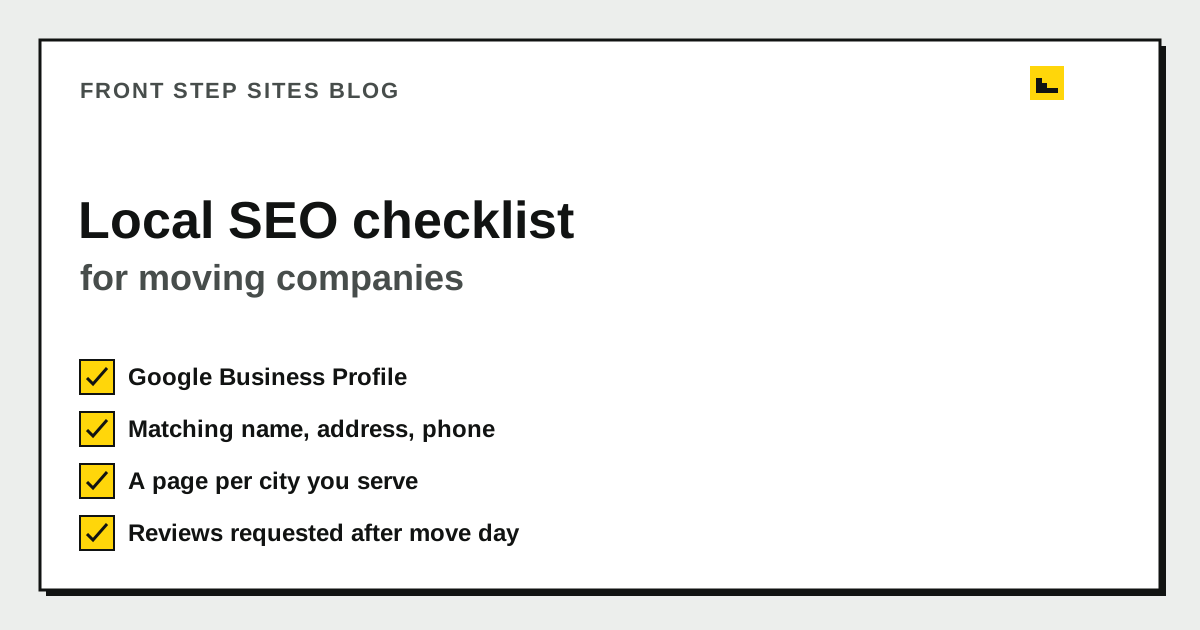
A local SEO checklist for a moving company covers four areas: a complete Google Business Profile, a consistent business name, address, and phone number everywhere you're listed, a real page for each city or zip you actually serve, and reviews requested while the move is still fresh. Work through them in that order. Each one depends a little on the one before it, so fixing your profile before you chase new listings saves you from copying the same mistake twenty times.
Is your Google Business Profile complete and accurate?
- Use your exact legal or trading business name, not a version padded with extra keywords.
- Choose "Moving company" or "Moving and storage service" as your primary category, and only add a secondary category if you genuinely offer it, such as "Self-storage facility."
- If you handle interstate moves, put your USDOT number in your business description. For-hire household goods movers that cross state lines must register with the Federal Motor Carrier Safety Administration and hold a USDOT number and MC operating authority, according to the FMCSA, and a visible, checkable number tells a nervous customer you're not one of the rogue movers the agency warns about.
- Set honest hours, including whether you take calls on weekends when most residential moves happen.
- List your real service area as cities or zip codes rather than a radius, and keep it to places you can actually staff a crew and truck for on short notice.
- Upload real photos of your trucks, crew, and equipment, not stock imagery of an unmarked moving van.
There's a lot of company to stand out from. According to IBISWorld's 2026 industry data, there are 9,430 moving services businesses operating in the United States, which works out to roughly 190 per state on average, though in practice they cluster hard around metro areas. A thin or outdated profile just blends into that crowd.
Is your business name, address, and phone number consistent everywhere?
Search engines and customers both use your name, address, and phone number, often shortened to NAP, to confirm that listings across the web describe the same business. A phone number that's current on your website but outdated on an old directory listing sends a mixed signal and can cost you a customer who calls the wrong number.
Check every platform where your business appears: your Google Business Profile, Facebook page, Yelp listing, Better Business Bureau profile, any moving-industry directories you've joined, and your own website footer. Here's what consistent formatting actually looks like across those listings, using a sample business as an example:
| Listing | Business name | Phone | Address |
|---|---|---|---|
| Google Business Profile | Summit Moving & Storage LLC | (555) 201-4477 | 1180 Freight Rd, Example City |
| Website footer | Summit Moving & Storage LLC | (555) 201-4477 | 1180 Freight Rd, Example City |
| Facebook page | Summit Moving & Storage LLC | (555) 201-4477 | 1180 Freight Rd, Example City |
| Yelp listing | Summit Moving & Storage LLC | (555) 201-4477 | 1180 Freight Rd, Example City |
Notice every column matches exactly, down to whether "LLC" appears and whether the address abbreviates "Road" as "Rd." If you've moved offices, changed your phone number, or renamed the business, go through old directories and update or remove the outdated listing rather than letting two versions of your business compete with each other online.
Do you have a service-area page for every city or zip you actually serve?
A single page claiming you serve an entire state tells a searcher very little. Build a page for each city or region you move people in and out of regularly, and give each one something genuinely useful: typical building types in that area (walk-up apartments, gated communities, office parks), parking or loading realities you've learned from experience, and whether a move there usually gets a binding or non-binding estimate.
- Don't create a page for a town you've served once and don't plan to return to; a thin page with no real local detail looks like, and can get treated as, a doorway page.
- Mention whether a move to or from that area is typically local, in-state long-distance, or crosses state lines, since that distinction affects which estimate type and paperwork applies.
- Link each service-area page back to your main services and your contact or quote-request page, not to your homepage.
The moving company website cost guide breaks down how many of these pages typically make sense at each pricing tier, and the guide to service-area pages covers when a dedicated page actually helps versus when it's better to fold a smaller town into a regional page.
Are you generating reviews timed to move day?
Moving is stressful, and most customers are relieved rather than reflective the moment the truck pulls away. Send your review request a day or two later, once boxes are unpacked and the stress has faded, rather than asking for feedback while someone is still surrounded by moving blankets.
- Send one follow-up request through text or email with a direct link to your Google Business Profile.
- Follow up once more about a week later if you haven't heard back, then let it go.
- Never offer a discount or incentive in exchange for a review; several review platforms treat that as a policy violation and it undermines the review's credibility anyway.
- Reply to every review, including critical ones, without sharing details about the customer's belongings, home, or move specifics.
Reviews carry real weight in this decision. According to BrightLocal's 2026 Local Consumer Review Survey, 97% of consumers read reviews for local businesses before choosing one, which for a moving company often means reading reviews about a crew that will be inside someone's home.
Have you checked the technical basics?
- Open your site on a phone using mobile data, not office wifi, and time how long the homepage and a service-area page take to load.
- Confirm your sitemap includes every service-area page you've built, not just your homepage and contact page.
- Click through your own navigation looking for broken links to old city pages or a discontinued service.
- If your site uses business schema (structured information in the page code), check that it matches your real business details and doesn't invent a rating or review count.
Frequently asked questions
How is local SEO for movers different from local SEO for other trades?
The biggest difference is the regulatory trust signal: a USDOT number and MC operating authority matter specifically to moving customers in a way they don't for most other trades, since interstate movers are legally required to carry them.
Should my moving company have a Google Business Profile for every city I serve?
No. Google allows one profile per business for its whole service area. List your coverage as multiple cities or zip codes within that single profile rather than creating a separate profile for each town.
What should a moving company service-area page actually include?
Real local detail: the kinds of buildings common in that area, parking or loading considerations, and whether moves there are usually local or long-distance. A page that only swaps the city name into a generic template won't hold up.
How do moving companies end up ranking well for local searches?
Through the basics done consistently: an accurate, complete Google Business Profile, matching business details across every listing, genuinely useful service-area pages, and a steady flow of real reviews. There's no shortcut that replaces those four.
How often should I revisit this checklist?
Whenever your service area, pricing structure, or contact details change, and at least once a quarter otherwise to catch outdated listings or a review request process that's quietly stopped working.
The short version
A moving company's local SEO comes down to a complete Google Business Profile, a business name, address, and phone number that match everywhere, real pages for the areas you actually serve, and reviews collected while the move is still top of mind. Work through them in that order and the rest tends to follow. Front Step Sites builds the service-area pages and review setup into a $99-a-year website, domain included.