Moving Company Google Business Profile Setup
Updated October 2, 2026
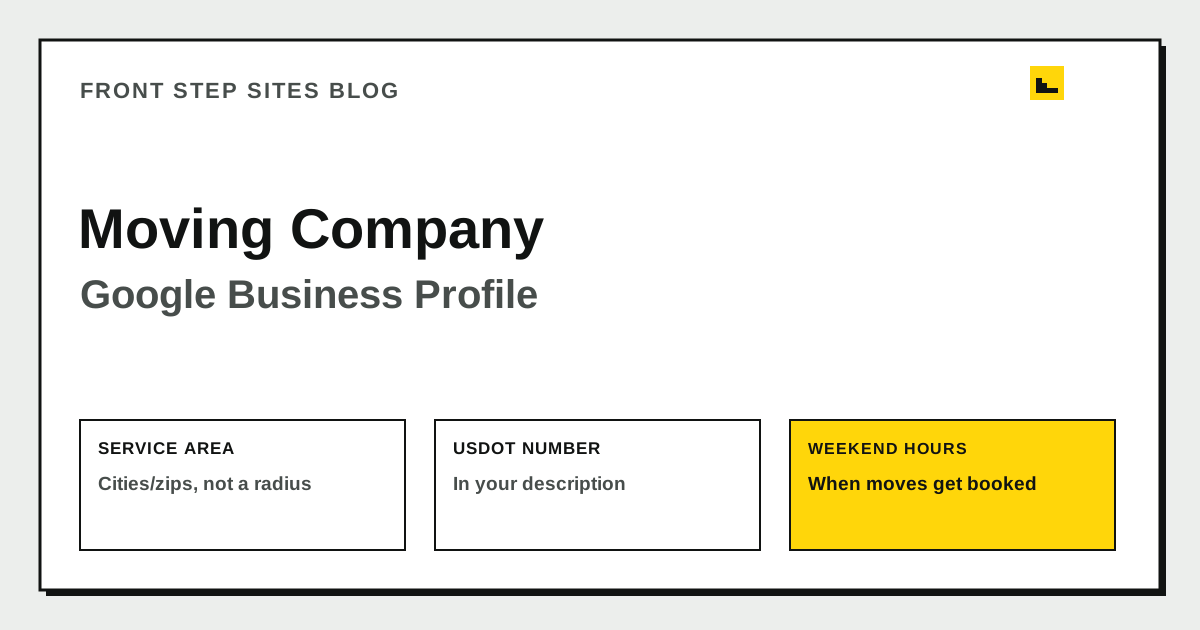
A moving company Google Business Profile needs three things most trades can treat as optional: a service area built from cities or zip codes instead of a radius, your USDOT number if you cross state lines, and hours that actually cover the weekends when most residential moves happen. Set the profile up as a service-area business if your crew works out of a truck and customers never visit an office. Get those three pieces right and a customer comparing three or four movers can tell in seconds whether you cover their route and are a legitimate, regulated operation.
How do you set up a Google Business Profile for a moving company?
Search your business name on Google Maps before creating a new profile. A past dispatcher, a previous owner, or an old directory listing may have already generated one, and claiming an existing profile keeps whatever reviews and history it has instead of starting from zero.
Use your real, legal business name, not a version padded with extra keywords like "Best Cheap Movers Near Me." Choose "Moving company" or "Moving and storage service" as your primary category, and add a secondary category only if you genuinely offer it, such as "Self-storage facility." If you don't receive customers at a fixed address, set the profile up as a service-area business during setup so Google doesn't publish a street address you don't want the public visiting.
What service area should a moving company list?
Google doesn't let you draw a radius around a pin anymore. According to Google's own service-area guidance, you build your coverage from a list of cities, postal codes, or similarly named areas, up to 20 of them, and the overall area shouldn't stretch much more than about two hours of driving time from where your business is based.
List the towns and zip codes you can genuinely staff a crew and truck for on short notice, not every town within range on a straight line. A mover who lists 20 towns across three counties but only ever answers quickly within a tighter radius generates calls they can't service well, and a customer who waited days for a callback from a "nearby" mover will say so in a review.
Where does your USDOT number go on a Google Business Profile?
Google has no dedicated field for a mover's USDOT number. Put it in your business description instead, since for-hire household goods movers that cross state lines must register with the Federal Motor Carrier Safety Administration and hold a USDOT number and MC operating authority, according to the FMCSA. A purely local, in-state operation is exempt, so if that's you, there's no number to add.
Showing the number costs nothing and gives a cautious customer, someone about to hand a stranger their household belongings, a way to verify you're not one of the rogue movers the FMCSA warns about. Don't invent a number you don't hold; it's checkable.
What hours actually matter for a moving company profile?
Set your hours to when your office or dispatcher actually answers, not just when crews are out on jobs. Most residential moves happen on weekends, so if you take booking calls on Saturdays, say so. If weekend calls route to voicemail until Monday, your hours should reflect that honestly rather than implying someone's standing by.
Reviews carry real weight in this decision. According to BrightLocal's 2026 Local Consumer Review Survey, 97% of consumers read reviews for local businesses before choosing one, and for a mover that often means reading about a crew that will be inside someone's home. Accurate hours reduce the chance of a frustrated "nobody called me back" review in the first place.
What belongs on the profile beyond the basics?
Upload real photos of your trucks, your crew, and your equipment rather than stock imagery of an unmarked van. If you offer binding versus non-binding estimates, mention that distinction in your business description so a comparison-shopping customer isn't guessing. Use posts for genuinely timely updates, like extra crew availability during a busy moving weekend, and reply to reviews without disclosing details about a customer's address or belongings.
| Profile field | What to put there | Why it matters for a moving company |
|---|---|---|
| Business name | Your real, legal business name | Keyword-stuffed names risk suspension |
| Service area | Cities/zips within ~2 hours drive | Matches Google's rules and sets honest expectations |
| Hours | Real weekend and booking-line coverage | Most residential moves happen on weekends |
| Description | USDOT number if you cross state lines | Only real spot to show it since there's no dedicated field |
| Photos | Real trucks, crew, or equipment | Replaces the trust a storefront visit would normally build |
Frequently asked questions
Can I set a radius instead of listing cities for my moving company?
No. Google removed the radius option for service-area businesses, so you need to list specific cities, postal codes, or similar areas instead, up to 20 of them.
Do I need a USDOT number on my profile if I only move people locally?
No. The USDOT and MC operating authority requirement applies to movers that cross state lines. A purely local, in-state operation is exempt and doesn't need to add one.
Should I set special hours for weekends?
Yes, if that's when your office actually takes booking calls. Most residential moves happen on weekends, and a profile that implies weekday-only coverage can cost you calls at the exact time demand is highest.
What happens if my moving company profile gets suspended?
Suspensions are usually tied to service-area or duplicate-listing issues. Review Google's guidelines, fix whatever triggered the flag, and request reinstatement through the business profile help center rather than creating a new listing.
Do I need separate photos for local and long-distance moves?
It helps if you offer both, since the trucks, crew size, and logistics often look different between a same-day local move and a multi-day interstate one.
The short version
A moving company Google Business Profile earns calls by matching Google's service-area rules, showing a USDOT number if you're required to carry one, and setting hours that cover the weekends when most moves actually get booked. Skip the keyword-stuffed name and the vague "serving everywhere" service area; both cost you trust faster than they earn you clicks. Front Step Sites builds a website to back up that profile for $99 a year, with the domain included and no setup fee.