Locksmith website mistakes
Updated October 2, 2026
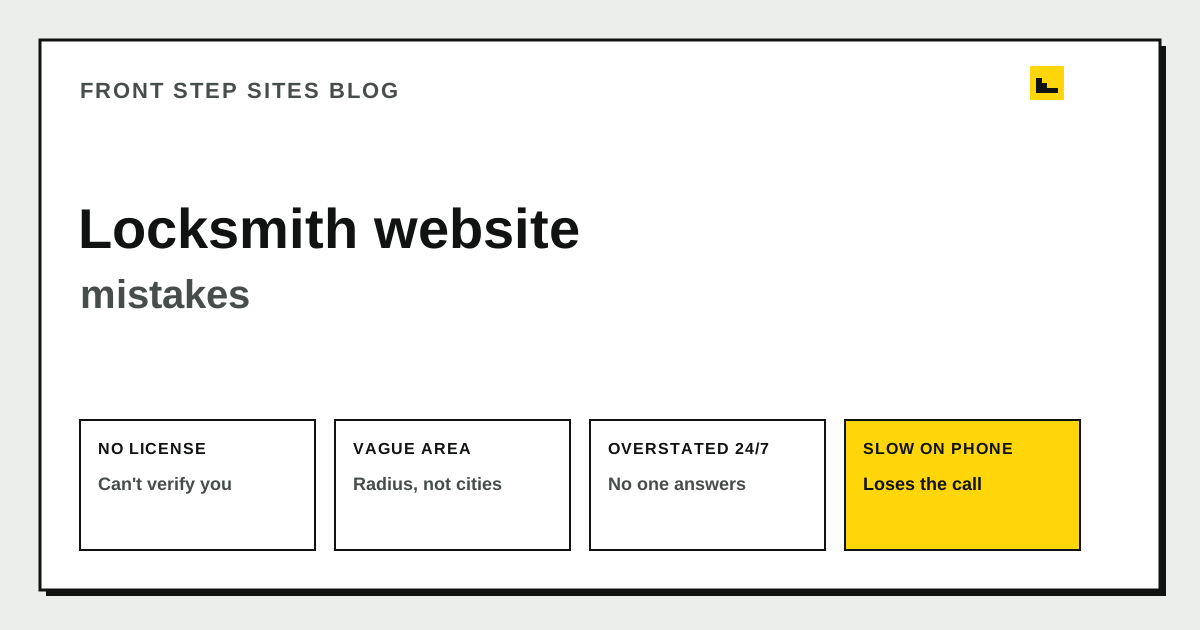
Someone's locked out of their car in a parking lot, or standing outside their own front door at midnight. They're searching on a phone, deciding in under a minute who to call. Locksmith websites lose that call for a handful of specific, fixable reasons, not because the whole site needs rebuilding.
It's a crowded field. IBISWorld counts 29,620 locksmith businesses operating in the U.S., and a nervous customer about to hand a stranger access to their home or car is screening hard before they dial. A site that doesn't answer the obvious questions in the first few seconds loses that screening.
Your site doesn't show a license number
A locksmith license signals to a wary customer that you're not running a scam, but most locksmith sites leave it off entirely. Not every state requires one: 13 states currently do, including California, Texas, Illinois, and Virginia, according to BestKeySupply's 2026 state-by-state locksmith licensing guide. If your state is one of the 13, put the number somewhere visible, like your footer or about page. If your state doesn't require one, say that plainly rather than leaving the topic untouched and looking like you skipped a step.
Your service area is a vague radius, not real cities
"Serving a 30-mile radius" tells a customer standing at the edge of your coverage nothing useful, and it doesn't match how Google itself handles service areas anymore. Google's own guidance has locksmiths and other service-area businesses list specific cities or zip codes, up to 20 of them, instead of a radius. If your website still describes coverage as a circle on a map, it's running on an outdated setup that confuses customers and doesn't match your Google Business Profile.
List the towns you can genuinely reach fast, in the direction you actually drive, rather than every town within range as the crow flies. A locksmith who claims 20 towns but only answers quickly within a handful earns exactly the one-star review you don't want.
You claim 24/7 service that isn't really staffed
Mobile searches dominate this trade more than most. Over 70% of locksmith searches happen on a phone, according to LocalMighty's 2026 locksmith SEO guide, and BrightLocal's research finds 46% of consumers always or often add "near me" to local searches. That means a lot of people checking your site at 2am are standing outside, in the dark, about to find out the hard way whether "Open 24 Hours" is true.
If overnight calls route through an answering service or an on-call rotation instead of someone who answers directly, say that plainly instead of claiming full around-the-clock staffing. An honest "call ahead after 9pm, emergency dispatch available" beats an unqualified 24/7 claim that falls apart the first time someone calls at 3am and nobody picks up.
Your site is slow on the phone someone's using right now
A locked-out customer isn't going to wait through a slow-loading homepage before they can find your number. Oversized, unoptimized photos are the usual culprit on a locksmith site, especially a hero image of a van or a toolkit that wasn't compressed before upload.
Test it yourself:
- Open your site on a phone using mobile data, not your home wifi.
- Time how long it takes for the phone number and service area to become visible and tappable.
- Try tapping the phone number right away, before every image finishes loading.
- If anything lags, compress the biggest photos on the homepage first.
There's no real evidence anyone has used this company
A site with no reviews, no real photos, and no mention of how long you've been in business reads as a risk to someone letting a stranger into their home or car. Show real reviews, even a handful, rather than none. A photo of your actual van, your tools, or you at work does more for trust than a stock photo of a generic toolkit that could belong to anyone.
| Mistake | What it costs you | Quick fix |
|---|---|---|
| No license number | Customer can't verify you're legitimate | Add it to your footer or about page if your state requires one |
| Radius instead of real cities | Doesn't match Google's rules or customer expectations | List the specific cities/zips you serve |
| Overstated 24/7 claim | A bad review the first time nobody answers at 2am | State real dispatch hours honestly |
| Slow mobile load | Visitor leaves before finding your number | Compress homepage images first |
| No reviews or real photos | Visitor isn't sure the business is legitimate | Add a handful of real reviews and real job photos |
For more on what the rest of the homepage needs to carry its weight, the locksmith Google Business Profile guide covers the same license and service-area details from the profile side. The locksmith local SEO checklist walks through the review-volume math behind that last mistake in more depth.
Frequently asked questions
Why isn't my locksmith website getting calls?
Usually one of a few specific gaps: no visible license number, a vague radius instead of real service-area cities, an overstated 24/7 claim, or a slow mobile page that loses visitors before they reach your phone number.
Do I need a license number on my site if my state doesn't require one?
No, but say so plainly rather than leaving the topic untouched, since a customer used to seeing license numbers from other locksmiths may wonder why yours is missing.
Is it bad to describe my service area as a radius?
It doesn't match how Google itself now structures service areas, and it's less useful to a customer than a real list of cities or zip codes. Switch to the specific-city format on both your website and your Google Business Profile.
How honest do I need to be about 24/7 availability?
Completely. If overnight calls go through an answering service rather than a tech who answers directly, say that specifically. The gap between what you claim and what you deliver shows up fast in reviews from customers who called at 2am.
The short version
Locksmith websites lose calls over specific, fixable gaps: no visible license number, a vague radius instead of real coverage cities, an overstated 24/7 claim, and slow mobile pages. Fix the phone number and service-area clarity first, then tighten the rest. Front Step Sites builds a website with those basics covered for $99 a year, domain included.