Appliance repair website mistakes
Updated October 1, 2026
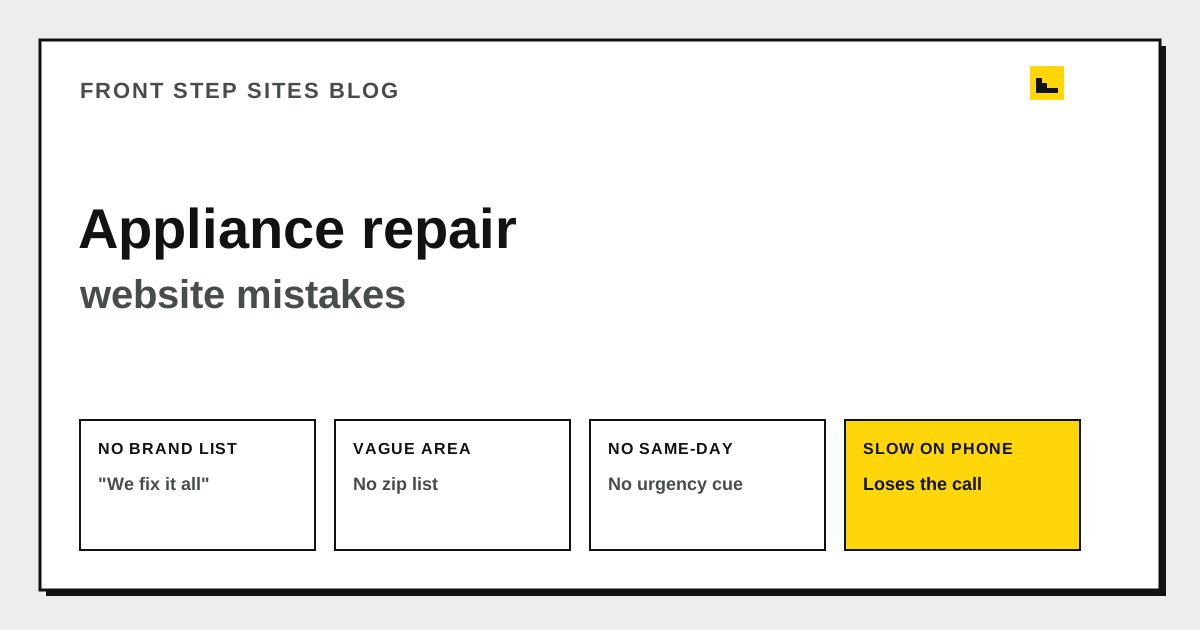
Someone's refrigerator stopped cooling an hour ago and everything in it is at risk. They're searching on a phone, standing in the kitchen, trying to figure out who can come today and whether that company even works on their brand. Appliance repair websites lose that call for a handful of specific, fixable reasons, not because the whole site needs rebuilding.
It's a crowded field to stand out in. According to IBISWorld's 2026 industry analysis, there are 37,453 appliance repair businesses in the United States, serving a $7.4 billion market, and no single company holds more than a small share of it. A visitor who's unsure whether your site answers their specific problem will simply try the next search result.
Your site doesn't say which brands and appliances you fix
"We repair all major appliances" tells a worried customer nothing about whether you've actually worked on their 8-year-old Samsung dishwasher or their LG front-load washer. List the appliance types you service (refrigerators, washers, dryers, dishwashers, ranges, ovens) and, if you specialize or have gaps, the brands you work on most.
If you don't service a particular brand or an appliance type like built-in wine coolers, say so plainly instead of staying vague. A customer who learns in thirty seconds that you don't touch their brand can start searching elsewhere immediately, instead of calling, waiting on hold, and finding out the hard way. Being specific builds more trust than a page that claims to do everything.
There's no way to tell if you cover a customer's zip code
A homepage that says "serving the greater metro area" leaves a customer in a specific suburb guessing. List the cities, towns, or zip codes you actually dispatch technicians to, and if your coverage has real limits, like no same-day service for towns more than 45 minutes from your shop, say that directly rather than letting someone wait on a callback that doesn't come.
Set this up as a Google Business Profile service area built from cities or postal codes, not a hidden shop address if you work out of a van and don't receive customers at a storefront. Keep the service-area list on your website matching whatever you've set in your profile so the two don't contradict each other.
The site doesn't say you can come today
A broken refrigerator or a flooding washer is usually an emergency to the person searching for it, even if it's routine work for you. If you offer same-day or next-day service, say so on the homepage in plain language, not buried in an about page. If same-day isn't realistic for every job, explain what typically qualifies (refrigerators and freezers often jump the queue; a dryer that still mostly works usually doesn't need to).
Give a realistic picture of availability by appliance type and urgency rather than a blanket "we're always available" claim you can't back up during a busy week. An honest "most refrigerator repairs get a same-day appointment" beats an unqualified promise that falls apart the first time someone calls on a Saturday.
Your site is slow on a phone, so people leave before they call
Most of this searching happens on a phone, standing in a kitchen or laundry room next to the appliance in question, and slow pages lose that moment. According to Google's mobile performance research, 53% of mobile visitors abandon a page that takes longer than three seconds to load, and the probability of a visitor bouncing climbs 32% just from going from a one-second load to a three-second one.
Here's what that looks like applied to an ordinary month. Industry research on load time and conversions has found that conversion rates drop by roughly 4.42% for each additional second of load time between zero and five seconds. If your homepage currently takes 5 seconds to load instead of 2, that's about three extra seconds of delay, which works out to something like a 13% relative drop in the visitors who'd otherwise call. For a shop getting 500 mobile visits a month that normally turn into 20 calls, a 13% relative drop is roughly 2 to 3 calls a month quietly lost to load time alone. Treat that as a rough illustration of the stakes, not a guarantee, since every site and audience behaves a little differently.
Test it yourself:
- Open your site on a phone using mobile data, not your home wifi.
- Time how long it takes for the phone number and service list to become visible and tappable.
- Try tapping the phone number or quote button right away, before every image finishes loading.
- If anything lags, start with the biggest photos on the homepage; oversized, unoptimized images are the most common cause of a slow appliance repair site.
There's no real evidence anyone has used this company
A page with no reviews, no real photos, and no mention of how long you've been in business reads as a risk to someone letting a stranger into their home to work on an expensive appliance. Show real reviews, even a handful, rather than none. A short line about how long you've been repairing appliances in the area, if it's genuinely true, does more than a generic "trusted by homeowners" claim with nothing behind it.
Photos help too: a technician actually working on an appliance, a marked service vehicle, or a clear photo of your shop if you have one. Skip stock photography of a generic repair person in a uniform that doesn't match your own; it reads as filler rather than evidence.
| Mistake | What it costs you | Quick fix |
|---|---|---|
| No brand or model list | Customer can't tell if you work on their appliance | Name the appliance types and brands you actually service |
| Vague service area | Wasted calls from out-of-area customers, or lost ones from in-area customers who assume you don't cover them | List real cities or zip codes, matching your Google Business Profile |
| No same-day messaging | Urgent repairs go to a competitor who says so clearly | State same-day availability by appliance type, honestly |
| Slow mobile load | Visitors leave before reaching your phone number | Compress homepage images first; they're the usual culprit |
| No reviews or real photos | Visitor isn't sure the business is legitimate | Add a handful of real reviews and real job photos |
For more on what the rest of the homepage needs to carry its weight, the auto repair website guide covers the same kind of trust-building structure, even though the trade is different. The appliance repair website cost guide breaks down what it typically costs to fix these gaps depending on who builds the site.
Frequently asked questions
Why isn't my appliance repair website getting calls?
Usually one of a few specific gaps: unclear coverage of brands or appliance types, a vague or missing service area, no same-day messaging for urgent repairs, or a slow mobile page that loses visitors before they reach your phone number. Check each one rather than assuming the whole site is the problem.
What's the biggest appliance repair homepage mistake?
Vagueness. A homepage that says "we fix appliances" without naming the appliance types, brands, or service area makes a worried customer guess whether you can actually help, and guessing usually ends with a different search result.
Do I need a page for every appliance brand I service?
Not necessarily a full page each, but you do need the brands and appliance types named somewhere a visitor will actually see, typically the homepage or a dedicated services page, rather than left implied by a photo gallery.
Are appliance repair SEO mistakes different from general website mistakes?
Many overlap with any local service business, like unclear service areas and slow mobile pages. What's specific to appliance repair is the brand and model detail: customers searching for a repair almost always have a specific appliance in mind, and a generic site misses that.
The short version
Appliance repair websites lose calls over specific, fixable gaps: no clear list of brands and appliance types, a vague service area, no same-day messaging, and slow mobile pages that lose visitors before they find your phone number. Fix the broken phone or quote path first, then tighten the specifics. Front Step Sites builds a website with those basics covered for $99 a year, domain included.